LIV Golf
Creating a scalable media platform for a growing global sports league.
Background
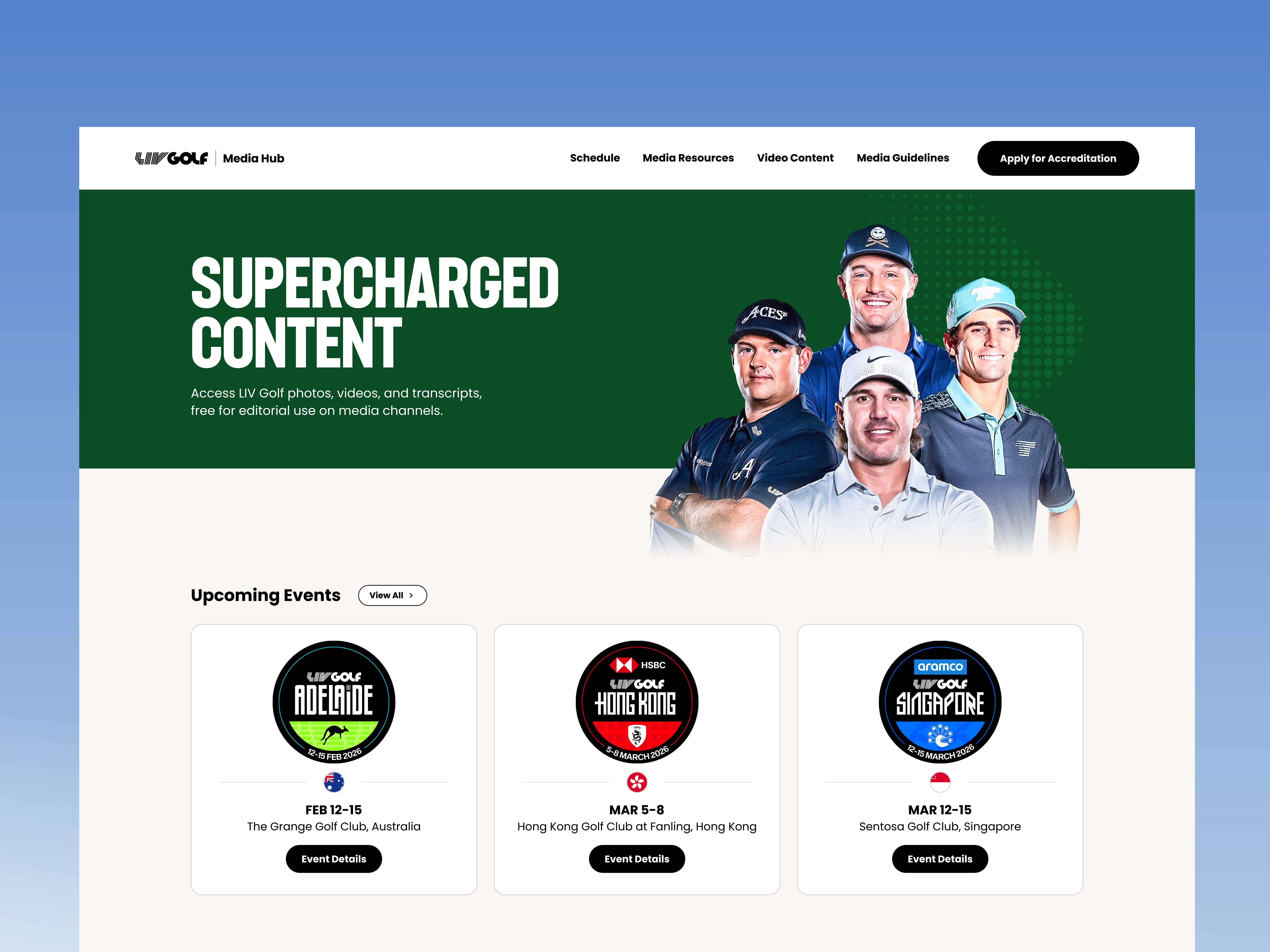
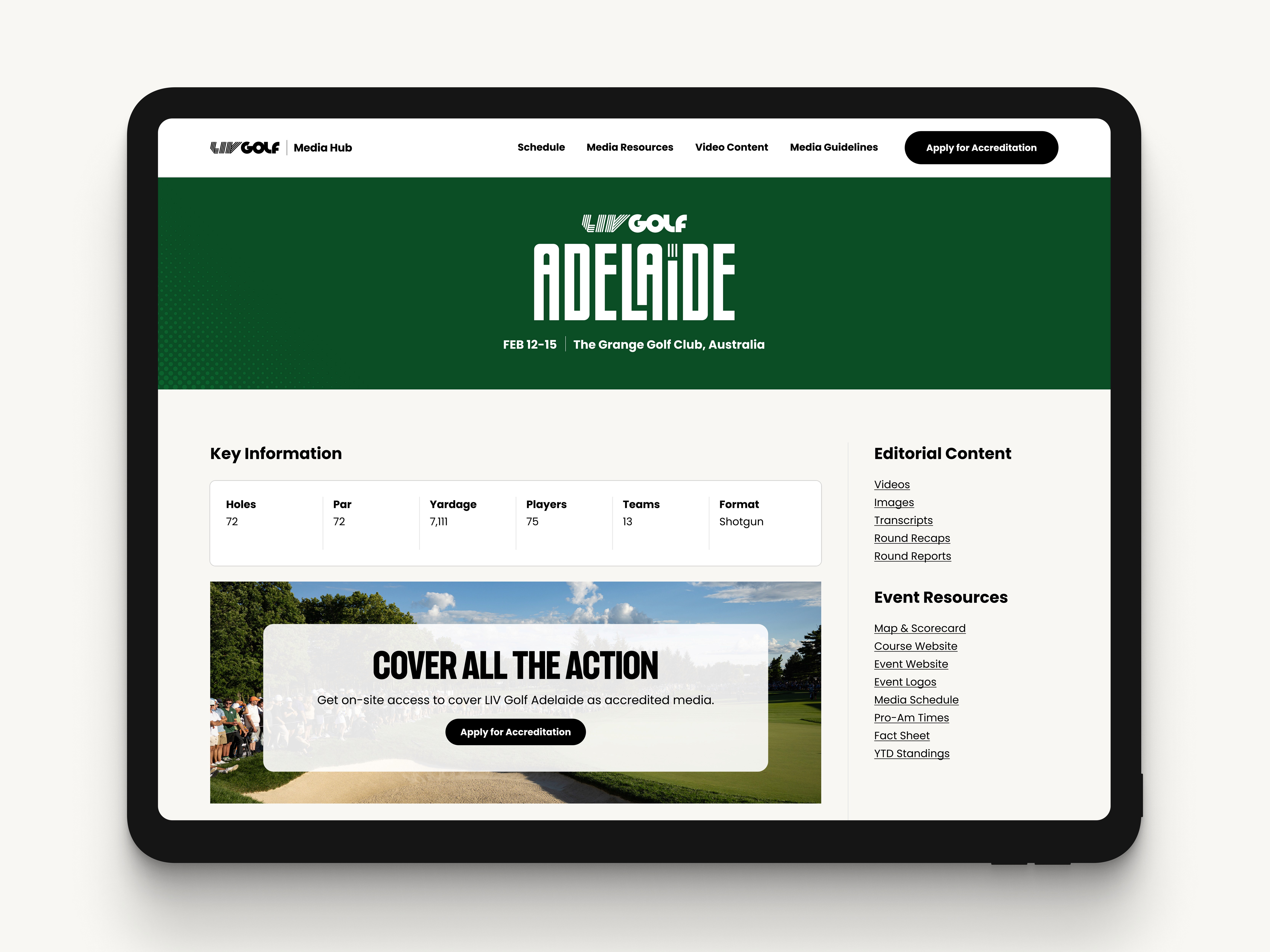
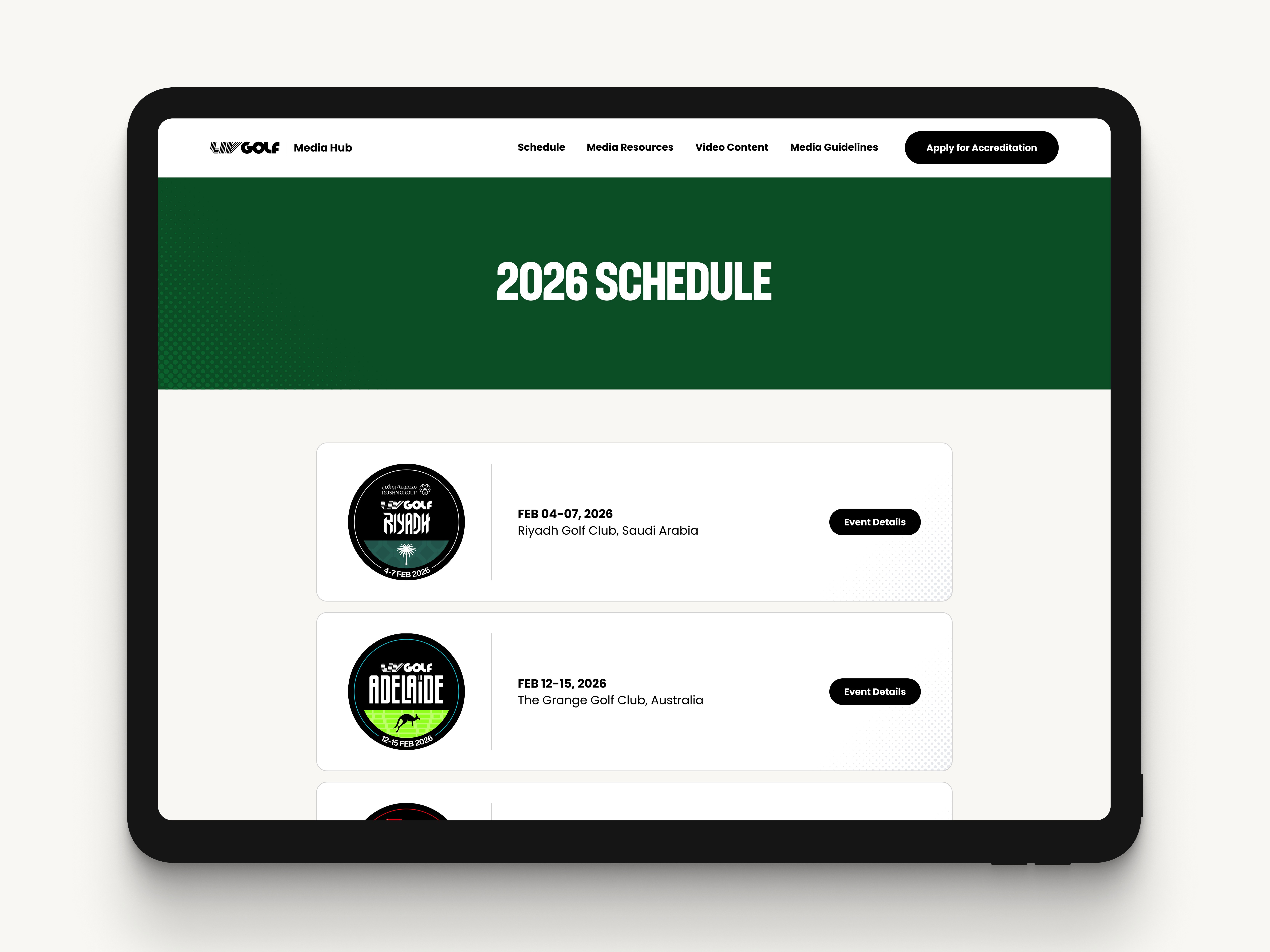
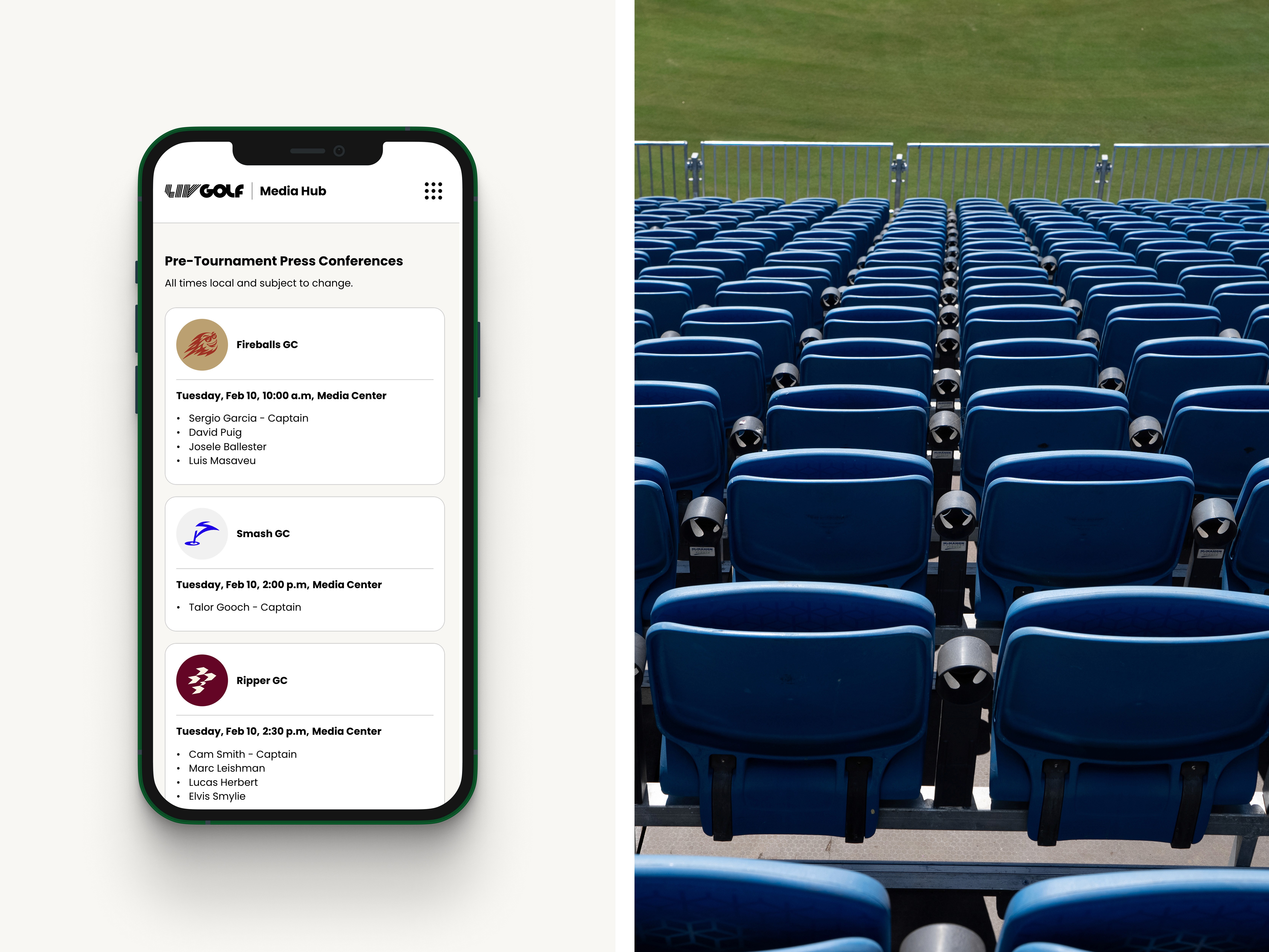
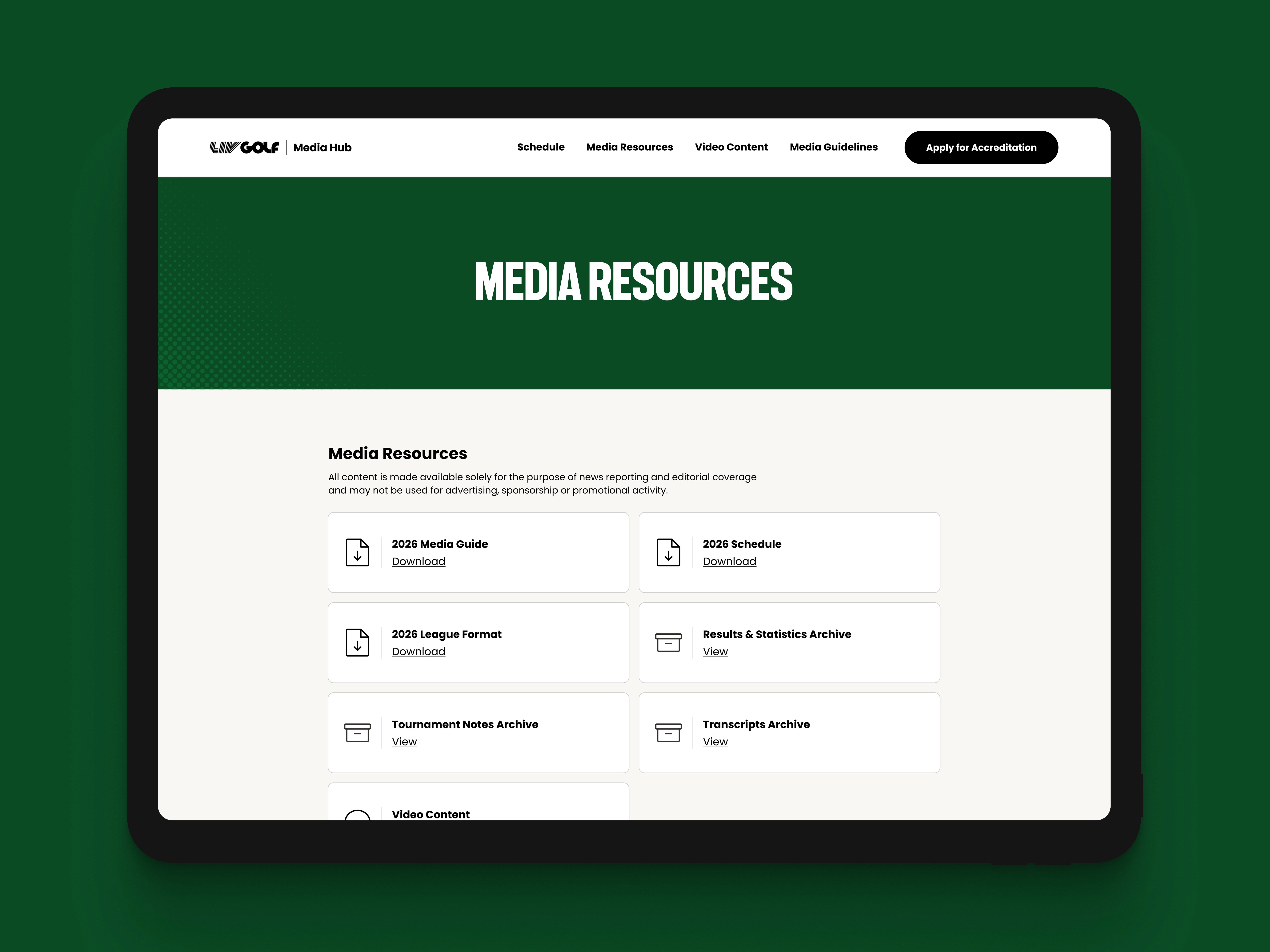
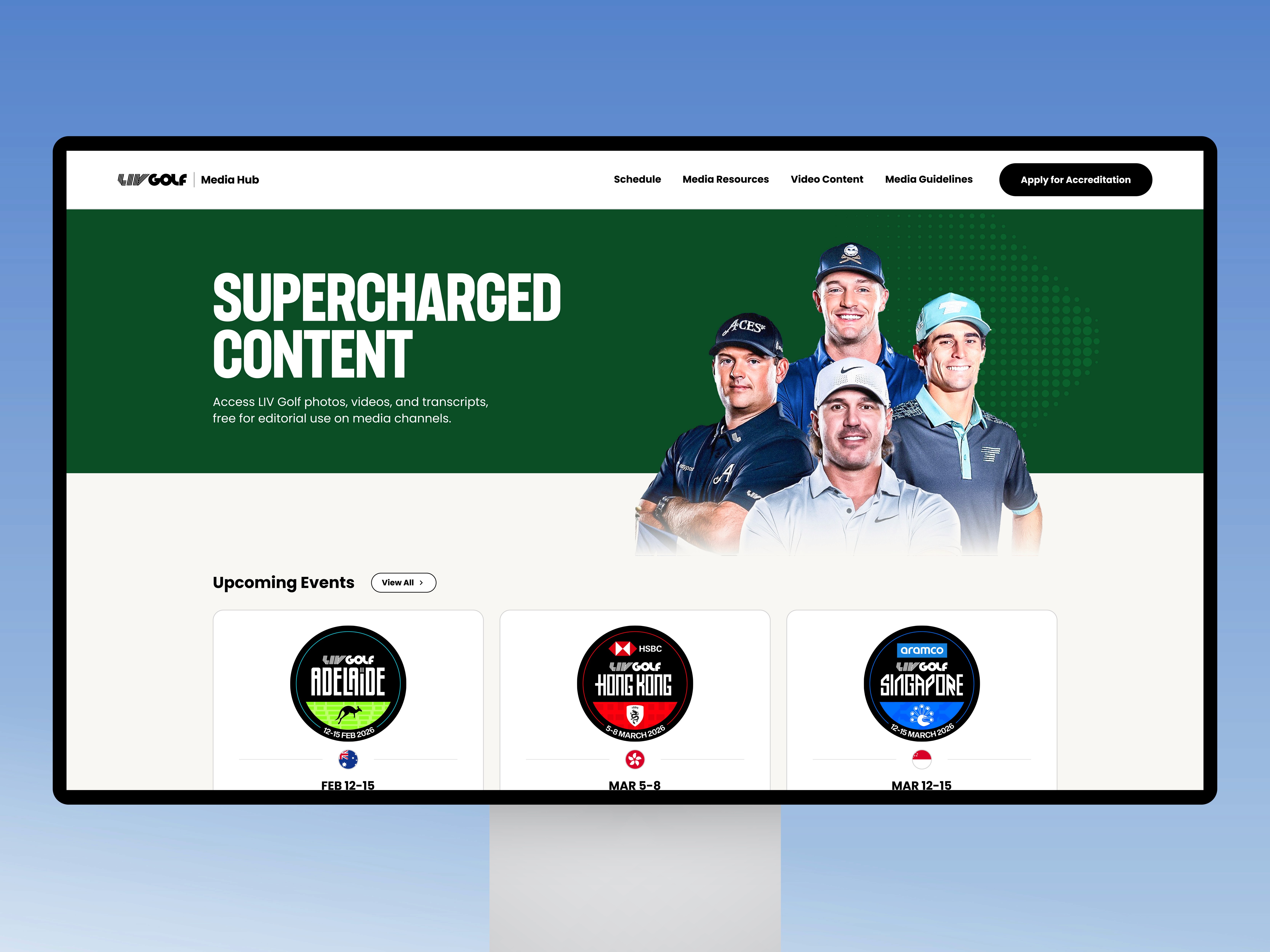
LIV Golf's Media Hub serves as the league's central platform for accredited journalists, photographers, broadcasters, and communications teams covering events around the world. The platform provides access to accreditation information, schedules, press conferences, imagery, videos, editorial resources, and event-specific materials throughout the season. As LIV Golf expanded its global event calendar, the role of the Media Hub evolved alongside it, becoming an increasingly important operational platform supporting media activity before, during, and after tournaments where timely access to accurate information was critical to both media coverage and internal operations.
Approach
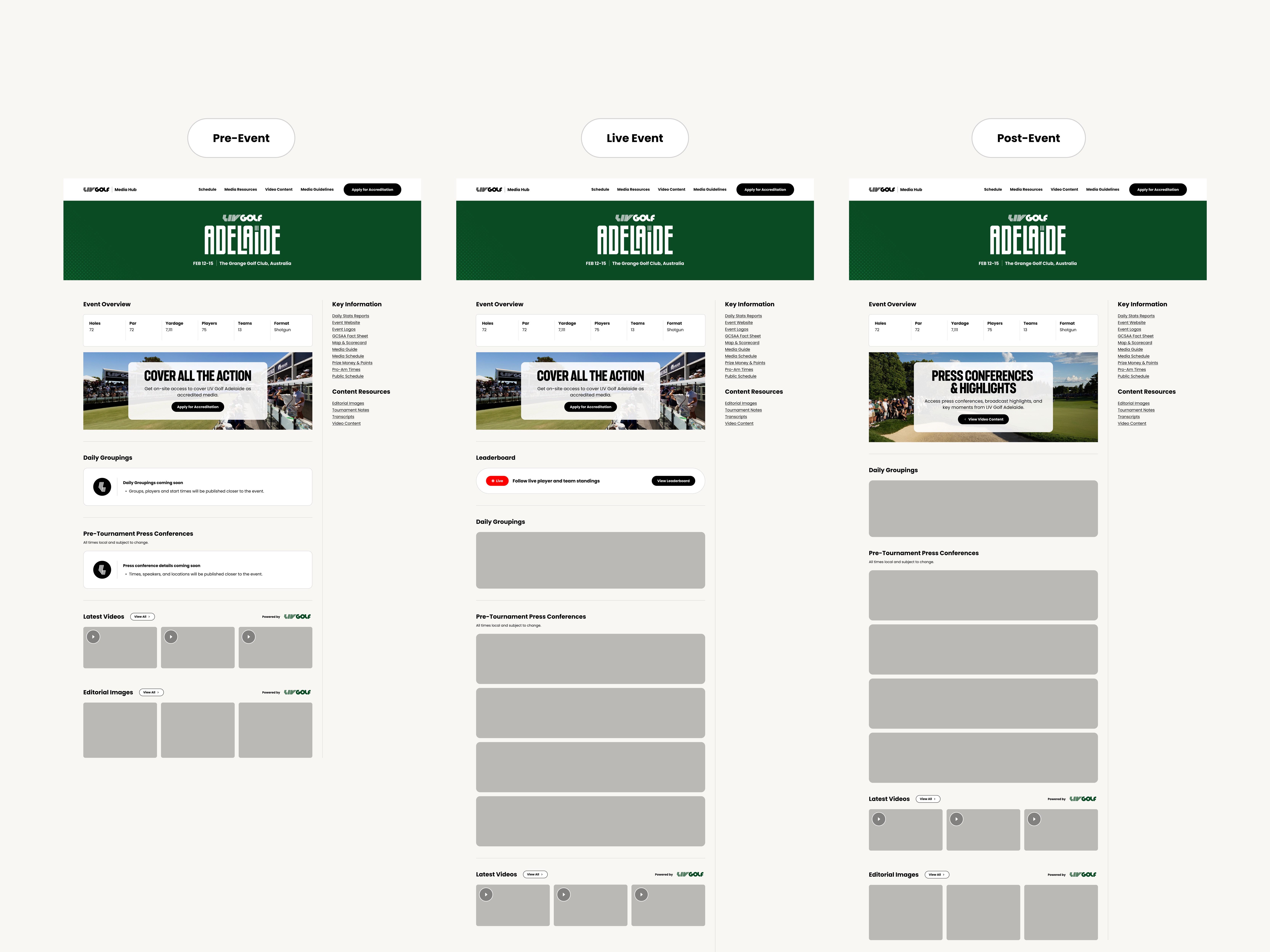
The existing platform contained the information users needed, but maintaining consistency across a growing tournament calendar was becoming increasingly difficult. Event information, accreditation details, schedules, media assets, videos, and supporting resources all needed to be managed across multiple events while continuously adapting to changing event conditions. South Lane rebuilt the Media Hub around a unified CMS-driven event architecture, introducing reusable templates, structured content relationships, lifecycle-driven content management, and shared publishing workflows. The platform was redesigned and migrated to Framer, creating a more cohesive experience while reducing duplication, improving content organization, and providing a consistent framework for managing tournaments throughout the season.
Result
The rebuilt Media Hub provides LIV Golf with a more structured and dependable platform for managing media operations across its global event calendar. Media users can access accreditation information, schedules, resources, videos, and event content through a more consistent experience, while internal teams benefit from clearer publishing workflows and a platform that is easier to maintain as requirements evolve. Structured event architecture, lifecycle management, and governance standards help ensure information remains accurate throughout every stage of the event cycle, creating a foundation capable of supporting future events, new content types, and the continued growth of the league's media operations.